Winds Could Help Fuel Severe Threat
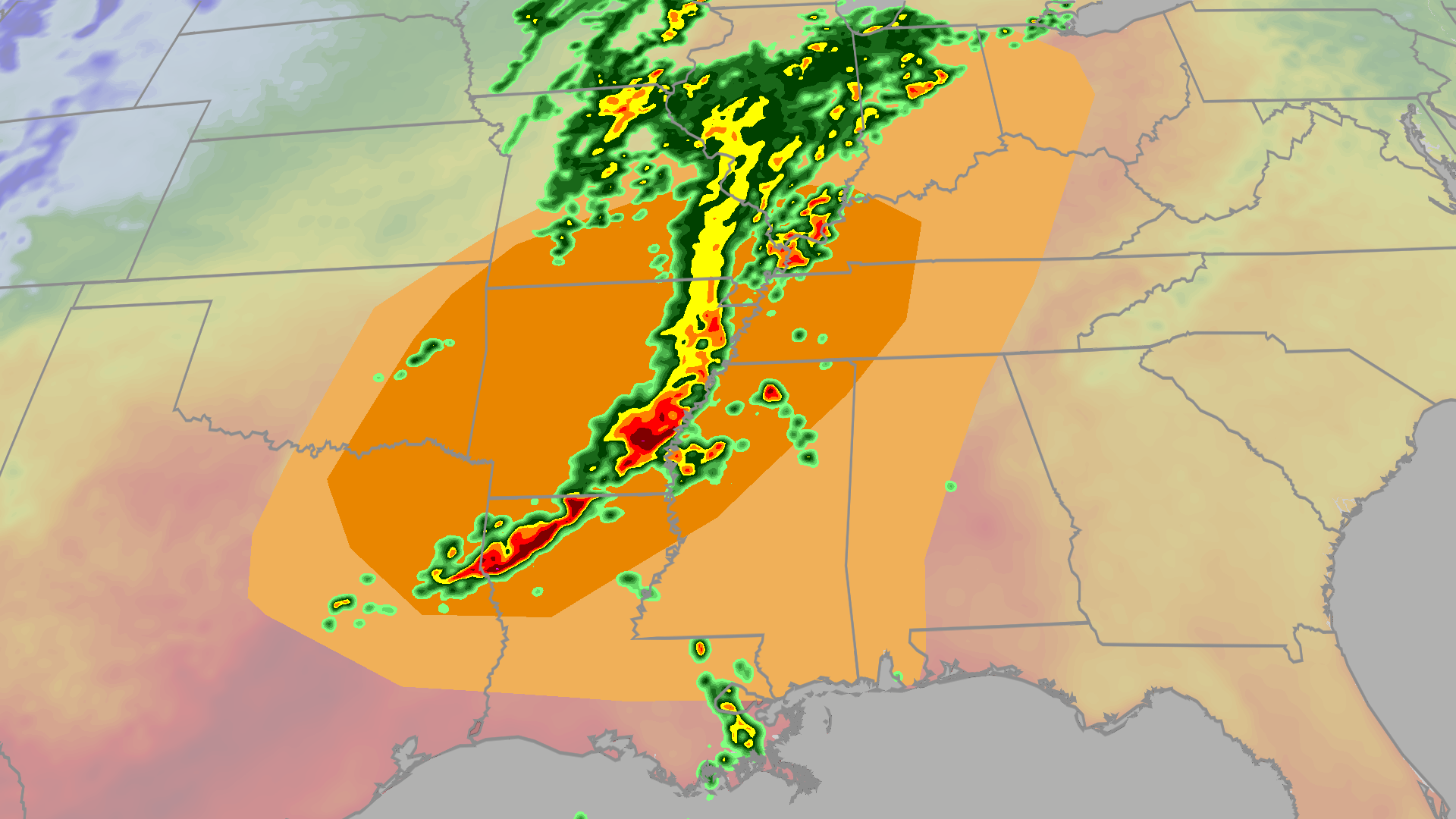
Severe weather is forecast to return to parts of the Mississippi Valley and South this weekend, with a threat of damaging winds, hail and even a few tornadoes breaking a relatively quiet stretch for the U.S. this fall.
Forecast Timing
– Saturday: Severe thunderstorms are most likely during the day from eastern Oklahoma and southern Missouri into Arkansas, northeastern Texas and northern Louisiana.
– Saturday night: The severe threat may continue and stretch from southern Illinois and western Kentucky into western and Middle Tennessee, Mississippi, Louisiana and possibly into parts of Alabama.
Weather in your inbox
– Sunday: The severe threat appears lower Sunday, but at least a few severe thunderstorms are possible from the Appalachians to the northern Gulf Coast.
(MAPS: Daily Rain, Thunderstorm US Forecasts)

Severe Weather Outlook
a
Threats
– A few of the storms Friday afternoon and night may produce hail and strong wind gusts.
– The main severe weather threat Saturday and Saturday night appears to be damaging wind gusts capable of tree damage and power outages in the areas shaded in the map above.
– While this does not appear to be a large outbreak, there is a threat of a few tornadoes, both embedded within any lines or clusters of thunderstorms, and with any supercell thunderstorms that may form Saturday
– Some large hail is possible in the strongest storms Saturday.
– Locally flooding rain is also possible in the middle and lower Mississippi Valley Saturday and Saturday night.
– Damaging thunderstorm winds and at least a small tornado threat are also on the table Sunday in parts of the East and Southeast.
What You Should Do
It has been awhile since a more concentrated severe weather threat has been on the table.
The keys are to be aware of the threat, when it could happen, and have a plan to seek safe shelter.
Have multiple ways of receiving severe weather watches and warnings from the National Weather Service, including from an app like The Weather Channel app, NOAA weather radio, or local TV and radio.
Make sure your smartphone and NOAA weather radio are fully charged and any “do not disturb” function is turned off at night, so an overnight alert can wake you up.
(MORE: Tornado Safety Tips | What If No Basement | Dangers Of Severe Thunderstorms)
A Quiet Stretch
It’s not your imagination. It has been rather quiet, recently, on the severe thunderstorm front.
The map below shows the total number of severe thunderstorm reports — including tornado reports — so far in October. It’s far short of 100 total reports nationwide in the first half of October.
In fact, the biggest news so far this month regarding severe weather was an announcement of a late June EF5 tornado in North Dakota, the nation’s first in over 12 years.
October usually isn’t an active severe weather month. It averaged only 59 tornadoes over the past 20 years.
So far, the month has been dominated by expansive high pressure aloft over the Great Lakes, eastern Canada, the Northeast and Plains states. That’s a pattern of warmth, but suppressive of thunderstorms.
And when that pattern hasn’t been in place, cool, fall air has plunged into the eastern two-thirds of the country, taking thunderstorms off the table.
We’ve also had a complete lack of tropical storms and hurricanes in the U.S. since short-lived Chantal moved into the Carolinas in early July. These landfalling storms can be a significant source of tornadoes in the fall, as we saw last October with Hurricane Milton in Florida.

Preliminary reports of severe weather, including tornado reports, large hail and thunderstorm winds, wind damage in October through the morning of Oct. 15, 2025.
(NOAA/SPC)
Jonathan Erdman is a senior meteorologist at weather.com and has been covering national and international weather since 1996. Extreme and bizarre weather are his favorite topics. Reach out to him on Bluesky, X (formerly Twitter) and Facebook.


