UPPER MICHIGAN, (WLUC) – Kratom has become a household term in recent months—especially as Michigan lawmakers debate whether to prohibit its sale and as health officials track a rise in reported kratom-related medical cases.
In March, legislation to prohibit the sale or distribution of kratom products passed through the Michigan House. This week, TV6 learned of an overdose death in Marquette County involving kratom derivative products.
So, the question is: has kratom use—and the health risks tied to it—grown as quickly as the conversation around it?
Local and state health experts say they are seeing more signs that kratom and its derivatives are showing up in medical and treatment settings, even as many users still view it as a relatively benign, easy-to-buy product.
What is kratom—and why do people use it?
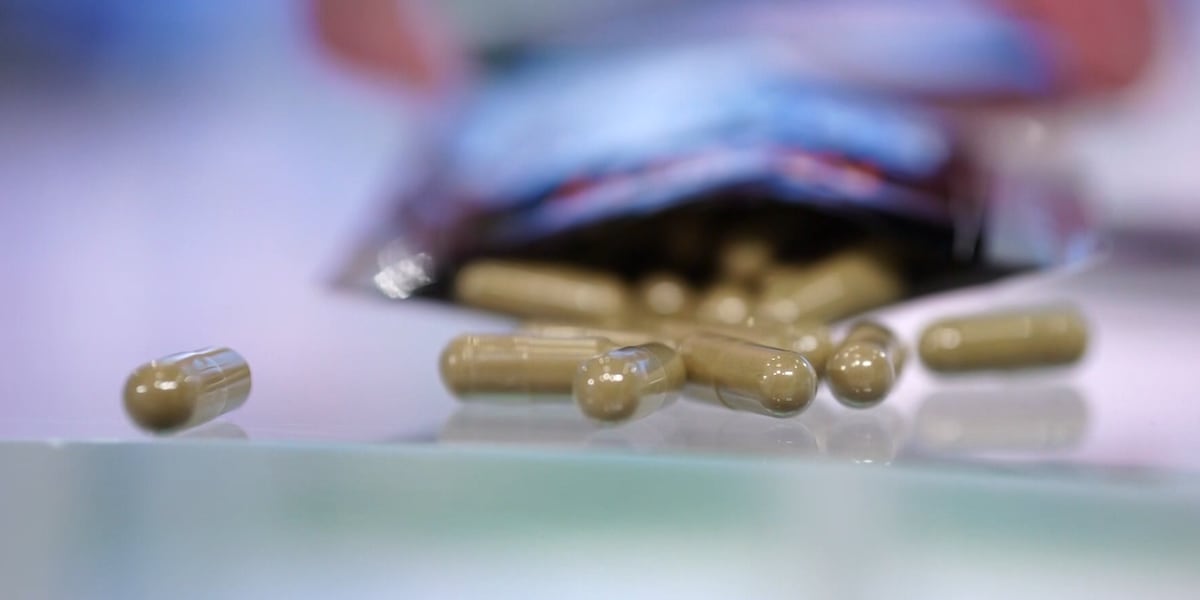
Kratom products are sold in different forms, including pills, powders and leaves. Great Lakes Recovery Centers Clinical Director Jessica Murawski said some people use kratom for its stimulating effects—sometimes as a coffee alternative.
“People use it for that stimulant effect. It’s marketed sometimes as a tea,” Murawski said.
In its natural form, kratom has been used for thousands of years for medicinal purposes. During a University of Michigan panel on kratom use, family physician Dr. Eliza Hutchinson said she has patients who report using kratom for depression or pain management.
But Hutchinson said the products sold under the umbrella of “kratom” can vary dramatically in potency—especially when synthetic or semi-synthetic derivatives are involved.
To explain the difference, Hutchinson compared kratom to coffee: both can describe products with very different strengths and effects.
“You might get decaf coffee that has very little caffeine. You could also order a coffee that has five shots of espresso, lots of sugar, lots of whipped cream, right? They’re all called coffee but those are two very different profiles of how I’m gonna experience that product,” Hutchinson said.
A more potent derivative: what experts say about 7-OH
Some products sold in gas stations or smoke shops may contain a kratom-related compound known as 7-OH. University of Michigan Clinical Assistant Professor Dr. Nathan Menke said the compound can bind to the same receptors in the brain affected by opioids such as heroin and fentanyl, and can be addictive.
Menke noted that withdrawal may differ depending on the specific kratom-related substance.
“Because it’s a partial agonist, the kratom, or the pure mitragynine and withdrawal, should be less than what you would expect from a full opioid like morphine,” Menke said. “But the 7-hydroxy mitragynine, or the 7-OH, you’re gonna see normal opioid withdrawal like we see with patients using morphine or fentanyl.”
Treatment providers say they’re seeing more kratom-derivative withdrawal
In the U.P., Murawski said that over the last year she has seen an increase in patients at GLRC facilities experiencing withdrawal from kratom derivative products.
Murawski also pointed to how widely available these products are—and how they are marketed—as a driver of misunderstanding.
“With it being so accessible in stores and easy to get, as well as a lot of the ways that it’s marketed, I think it leads to some misinformation for why people start to try it,” Murawski said.
Michigan Poison and Drug Information Center reports a rise in kratom-related cases
Data from the Michigan Poison and Drug Information Center shows the annual number of documented medical cases in the state involving kratom use increased from 52 in 2024 to 116 in 2025, a 123% jump.
Murawski said kratom’s lack of regulation can be risky for consumers.
“If they purchase it at one store or even between products, the variation of the chemicals that are in it and the substance might vary pretty greatly,” Murawski said. “So, we don’t always know how that’s gonna interact with our bodies and what adverse effects that’s gonna have on us.”
MPDIC data indicates the distribution of health outcomes hasn’t shifted significantly even as total cases increased. The data shows:
- 39% of cases involved moderate health outcomes
- 10% involved major outcomes
A new study estimates millions of Americans have tried kratom
A study from the University of Michigan and Texas State University published Thursday estimates that more than five million people in the U.S. have used kratom products in their lifetime.
The study also estimates that more than 100,000 children ages 12 to 17 have used kratom.
What happens next for Michigan’s proposed ban?
Michigan lawmakers are considering further action after the bill to prohibit the sale or distribution of kratom passed through the Michigan House in March.
Murawski said she would welcome a law that strengthens oversight and improves public awareness.
“To help regulate the content of it, be able to put some more information out there about use of it for adolescents and younger and adults so that people will have awareness,” Murawski said. “It can’t come soon enough.”
Hutchinson agreed that inaction is not an option but cautioned against a full ban—saying some people report benefits and may be using kratom to meet needs not addressed elsewhere.
“Needing to recognize that there is a large group of people in Michigan and across the country who use these products with some benefit or are getting some need met, that isn’t getting met in some other way,” Hutchinson said.
If the legislation becomes law, Michigan will join Alabama, Arkansas, Indiana, Vermont, Wisconsin, Louisiana and Ohio in banning kratom products.
The video above will feature the TV6 livestream until staff can clip the corresponding story, if available, from broadcasts or other TV6 content. You can subscribe to our YouTube page or download TV6+ to stream the latest local news and weather.
Copyright 2026 WLUC. All rights reserved.